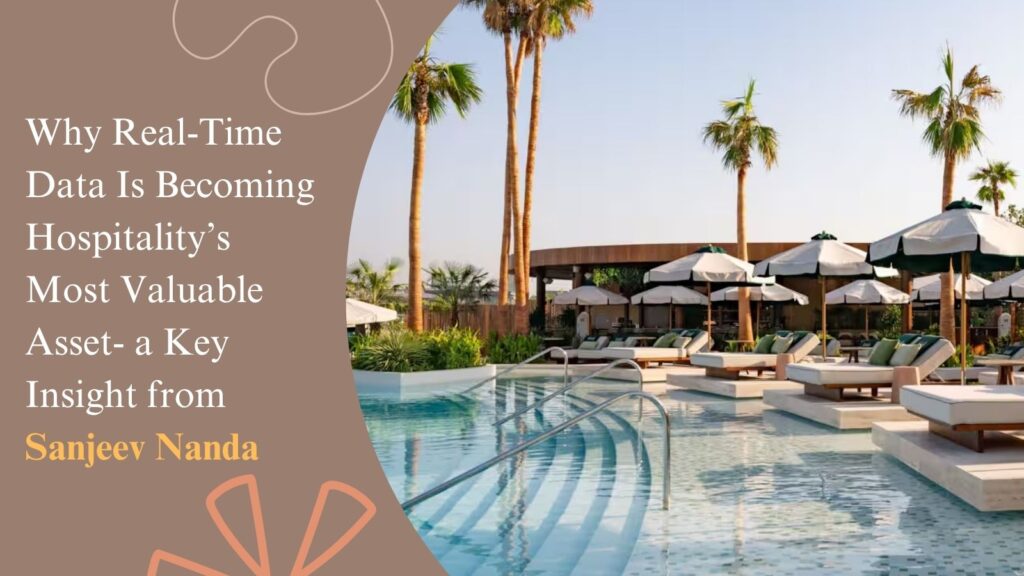
In the hospitality sector, timing plays an important role.
Experienced hoteliers knew when demand would increase, which menu items guests would prefer, and when to restock the bar based on footfall. Though experience and intuition remain invaluable, today’s hospitality leaders have something even more powerful at their fingertips – real-time data.
Real-time analytics let hotels, resorts, and property management companies move from reactive to proactive decision-making. Whether it’s about guest preferences and occupancy trends or dining patterns and operational efficiency, data matters the most when making final decisions.
For leading hoteliers like Sanjeev Nanda, having access to live insights makes a huge difference and contributes to the success of ventures such as Baoli Beach Club Dubai and Miss Tess. Afterthe occurrence of the Sanjeev Nanda BMW Case, he started focusing on transforming the hospitality sector.
Hospitality Has Entered the Age of Instant Decisions
Imagine a guest checking into a luxury hotel after a delayed flight. Before they even reach their room, the hotel already knows their dining preferences, loyalty status, previous stay history, and even whether they usually request a late checkout.
Also, front desk staff can see in real time which rooms are clean, which are checked out by the guests, and which are ready for early check-in. The timely information creates smoother, faster service.
- This isn’t the future.
- It’s already happening.
All thanks to advanced tools, including Modern Property Management Systems (PMS), Customer Relationship Management (CRM) platforms, and AI-powered analytics, which allow hotels to customize experiences in real time. Rather than reacting to guest requests, leading hospitality brands are anticipating them.
And it results in quicker service, happier guests, and stronger customer loyalty.
Luxury Experiences Are Built on Data
Luxury hospitality is no longer defined solely by huge lobbies or Michelin-inspired menus. Modern guests value customization instead of standardisation. Real-time data lets hotels understand guest behaviour almost instantly. If restaurant reservations are filling faster than expected, staffing would be changed immediately.
In case guests consistently prefer rooftop dining over indoor seating during certain seasons, management can redesign operations accordingly.
Every interaction generates information that helps improve the next guest experience.
The most successful hospitality leaders like Sanjeev Nanda truly understand that behind every booking, review, dining reservation, and customer interaction, data matters the most.
Dubai’s Hospitality Success Offers Valuable Lessons
Dubai has become one of the world’s most competitive hospitality markets, attracting millions of international visitors every year. In such a vibrant environment, exceptional service alone isn’t enough. Hotels and restaurants need to constantly adapt to changing guest expectations.
Several hospitality ventures linked with Sanjeev Nanda, including Taj Dubai, Billionaire Mansion, Baoli Dubai, among other demonstrate how premium hospitality today combines design, entertainment, culinary innovation, and operational excellence.
Though each concept presents a distinct experience to the guests, they have a common characteristic – creating highly personalised guest journeys. Whether it’s about managing reservations efficiently, understanding customer preferences, or delivering seamless dining experiences, real-time data is useful in maintaining service standards in such fast-evolving environments.
All these ventures of Sanjeev Nanda illustrate how successful hospitality brands are increasingly driven by information as much as inspiration.
Data Can’t Replace Hospitality – It Improves It
One common misconception is that technology replaces the human touch.
The opposite is true.
Real-time data removes routine tasks, letting employees spend more time doing what hospitality has always been about—building relationships.
Rather than manually looking for guest information, staff can focus more on meaningful conversations and proactively resolve issues before guests even highlight them.
So technology supports people; it doesn’t replace them.
The Rise of Predictive Hospitality
Perhaps the most exciting development is that hotels have shifted towards real-time information and are utilising it while serving the guests.
Artificial intelligence can now forecast occupancy levels, understand restaurant demand, suggest personalised packages, and even anticipate maintenance requirements.
Imagine a hotel automatically preparing a vegetarian welcome amenity because previous stay data indicates a guest’s dietary preferences. Or a restaurant recommending a favourite table based on earlier visits.
As per Sanjeev Nanda news, these small touches create memorable experiences and encourage repeat business.
Final Words
The hospitality industry has always remained important for people, which is something that is not going to change.
What’s evolving is the way businesses understand people.
Real-time data enables hotels to transform hospitality from reactive to proactive; it improves decision-making in operations, guest service, F&B, inventory, and revenue management.
Hospitality’s greatest asset was once location.
Today, it is information, and as Suresh Nanda son, Sanjeev Nanda, also leverages technology for maximum impact.
If your team is still relying on end-of-day reports to make critical decisions, then it’s time to switch to real-time analytics now.